
About Ikego
We asked ourselves how companies and designers could create products that do not destroy the planet, but keep it green and healthy 🌳

: – l
Current consumption changes the planet ☁️
The ♻️ ‘circular economy‘ offers practices that keep materials in use to protect our environment 🌱
The ‘circular economy‘ offers sustainable practices that keep materials in use ♾️ to protect our environment.
re
re
re
re
re
re
re
re
re
r
But there is one problem: These practices only work when they are supportedby the design of our products. Sadly most products fail to do this ❌
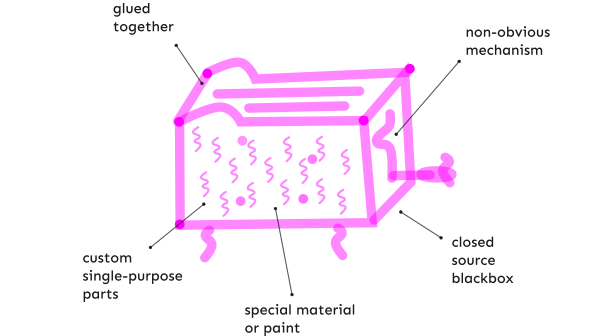
Current common design practices ↑, they make circularity difficult.
So we searched long and hard for a design approach that enables all practices. And when we found it, it came with an unexpected superpower:
.
🔎⚖✏♾💥
So we searched for a design approach that enables all circular practices at the same time. And it came with an unexpected superpower:
Open Multipurpose Parts!
Yes, it turns out if you assemble products from parts that have many different uses, circularity suddenly becomes quite simple.
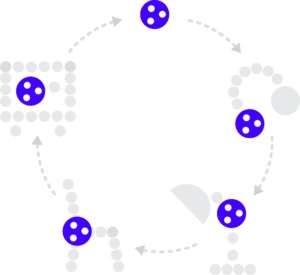
Multipurpose parts means parts have many use cases not just one, almost like LEGO bricks.
The problem now: We have to find and invent these parts and redesign everything with them. A LOT of experimentation is needed 🔬.
So. Let’s start the journey…
🚀
… together. It’s clear that such a goal can only be achieved when many work together. Y0⊍ make the difference:
Together
So we invite you and everyone to work with us on this vision, whether in close collaboration or independently on compatible solutions in other contexts.
↯
Let’s create a distributed multipurpose part design revolution for hyper-circularity!
ヽ(✿◠‿◠)ノ ♻️✨
🌼 💮 🏵️ 🌸
Visions & insights
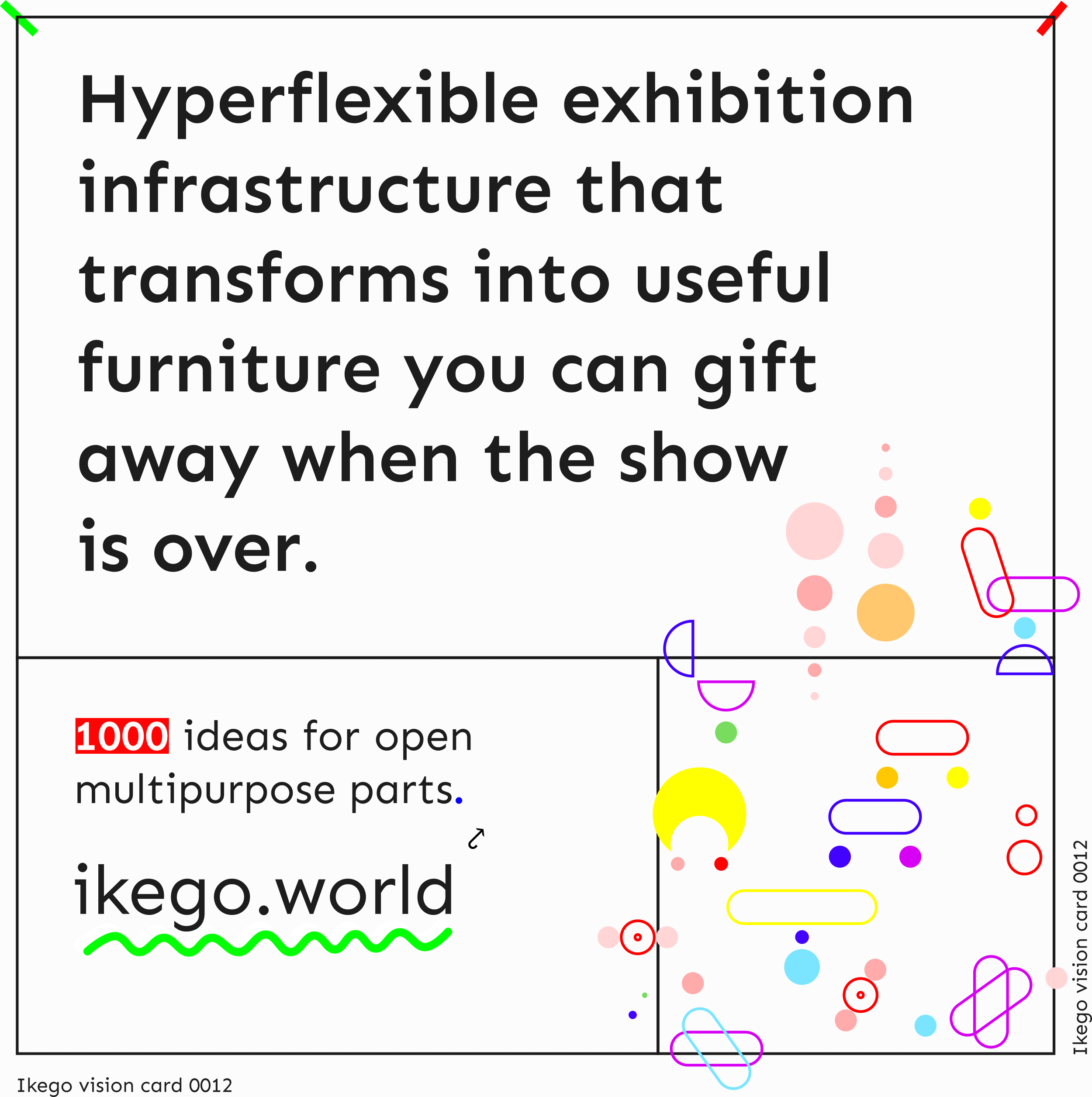
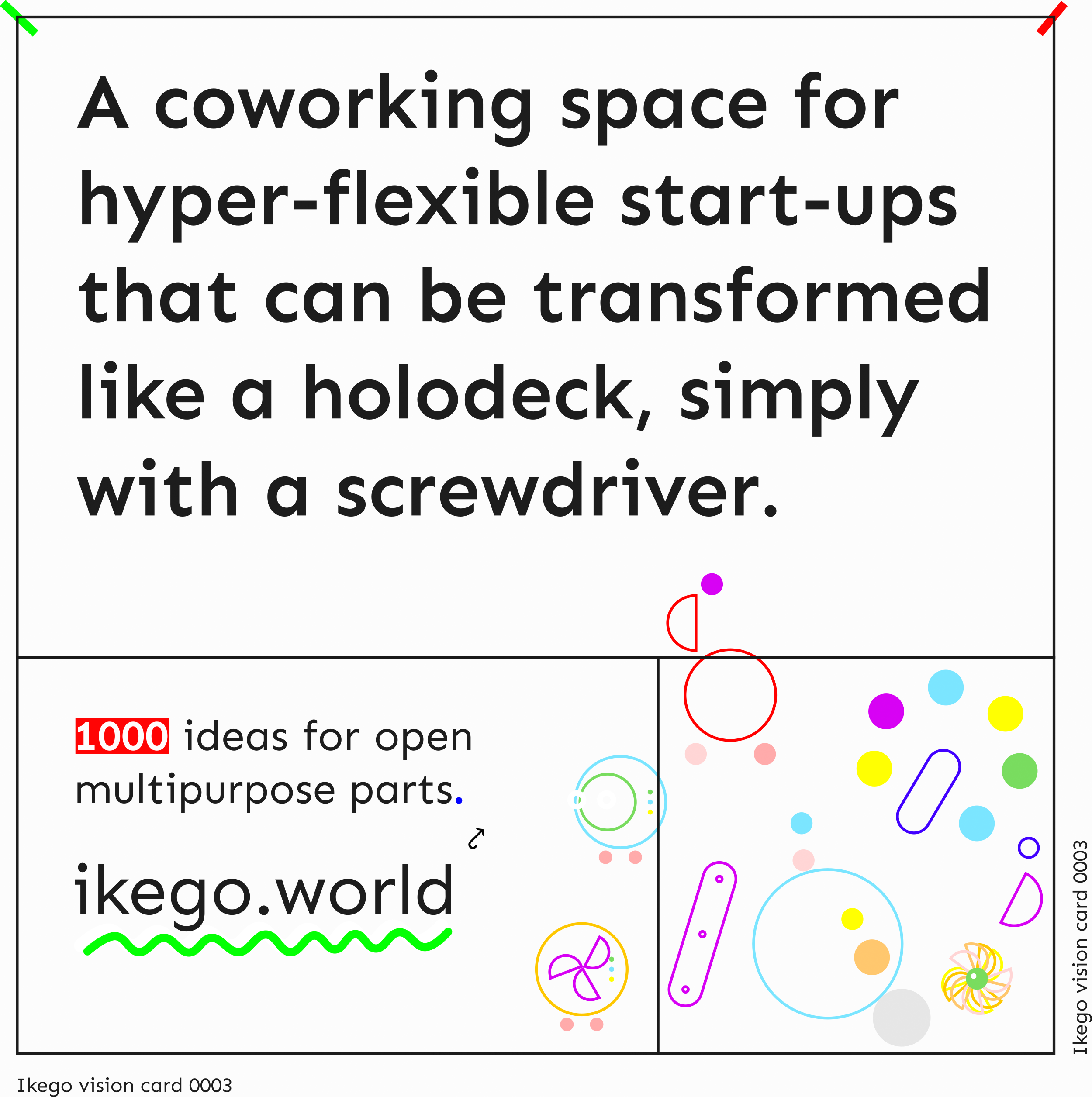
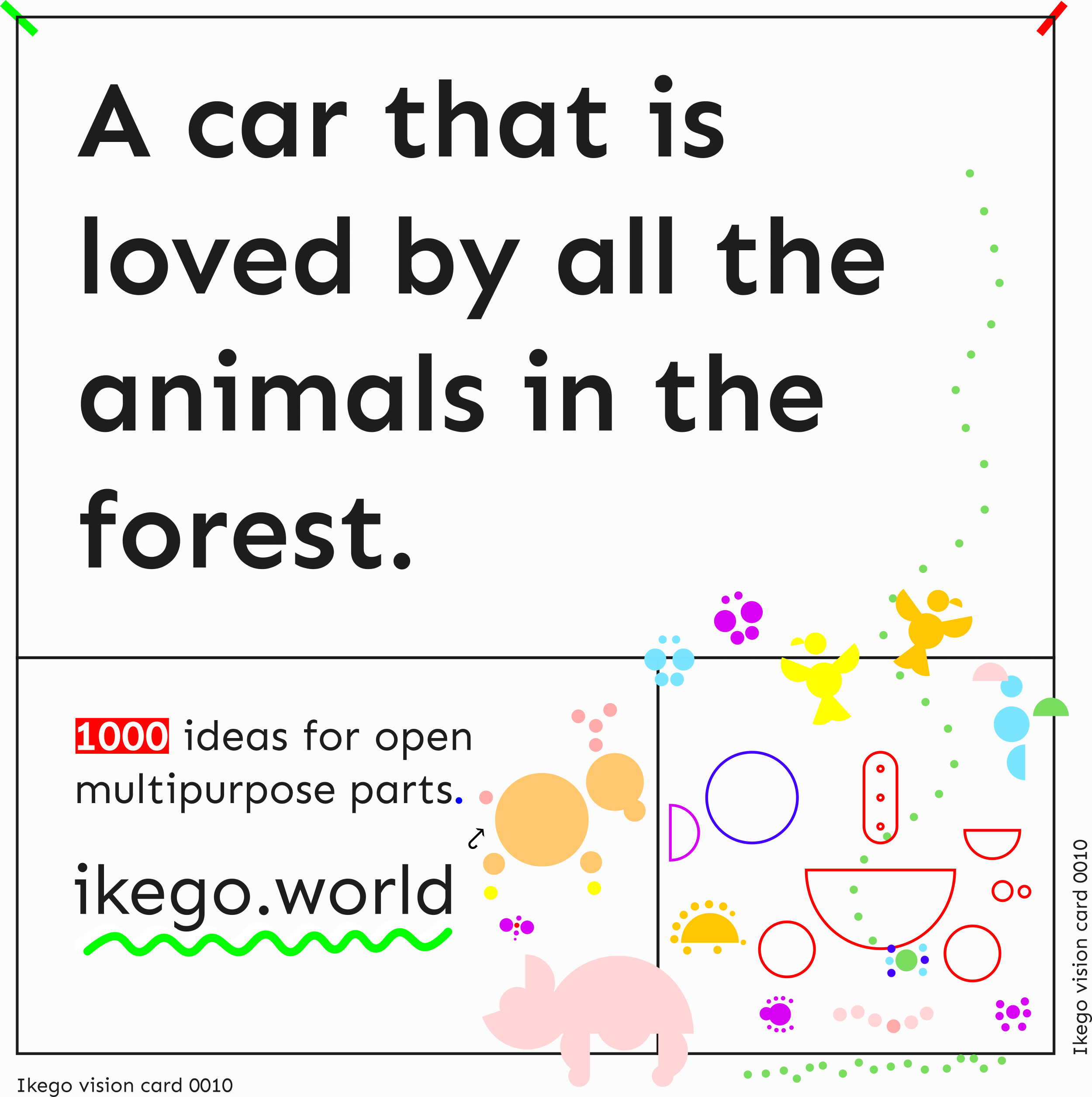
*
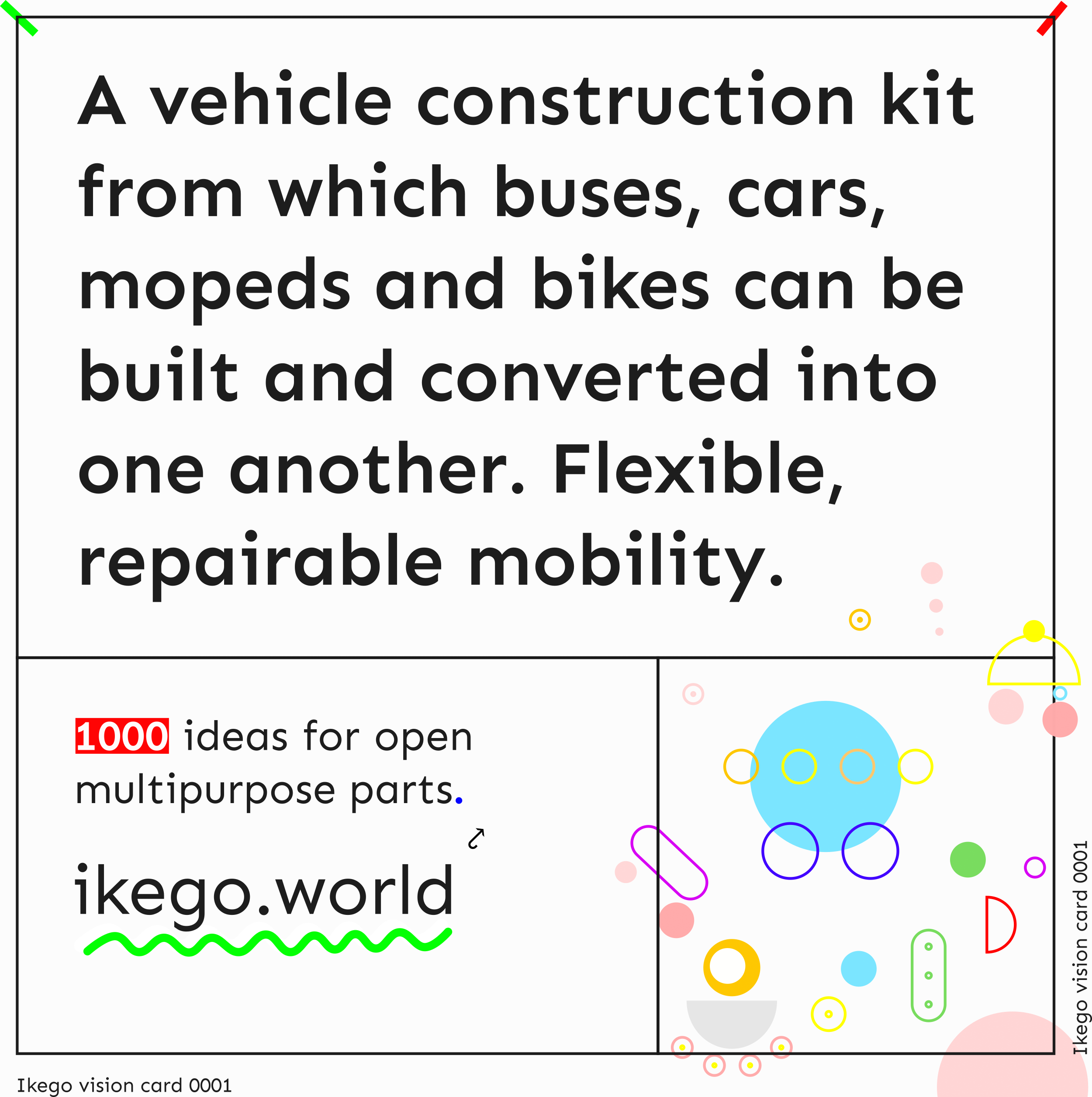
By giving our products the superpowers of Open Multipurpose Parts, we could solve the sustainability crisis while even improving the quality of our products and our lives.
⁕
Technology empowers us. And Open Multipurpose Parts are definitely another step toward turning us into superhumans.
⚘
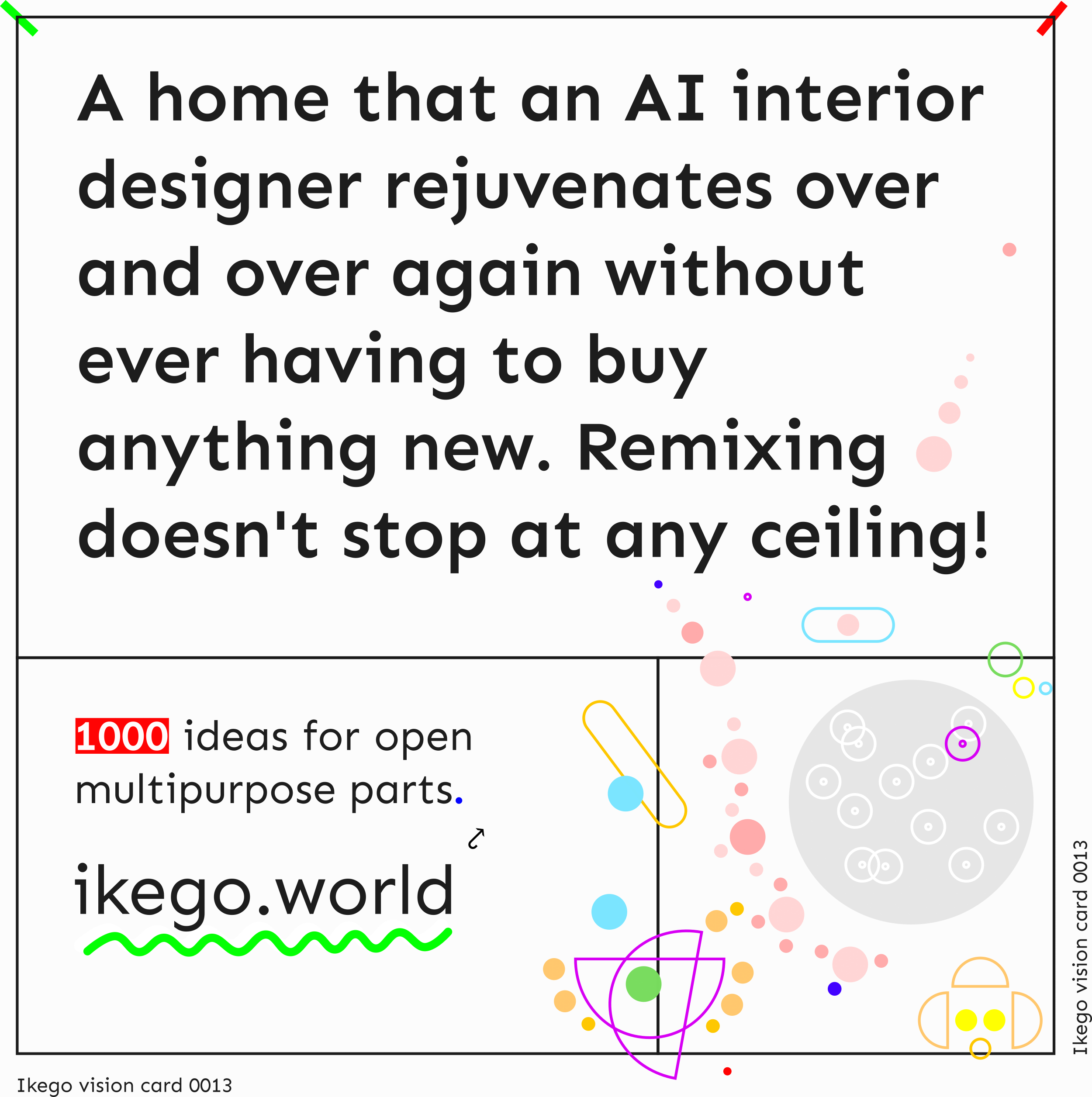
Imagine your entire home is equipped with Open Multipurpose Parts products. You live in a super dynamic building kit. Ask your AI assistant for remix ideas, and adjust things anytime. Next level freedom.
⁕
I think early adopters of products made from open, multipurpose parts will be people or institutions that can see an immediate and direct benefit from the convertibility of the products, such as young families, offices, exhibition spaces and nomadic individuals. More users will follow from there. For them remixability is a distant future option on the horizon rather than something that needs constant updating.
*
If you pay close attention to the world around you today, you will discover parts in some places that have more than one possible use. There are also “upcycling projects” for many things. Design with Open Multipurpose Parts aims to do more than just increase the number and distribution of these parts and solutions. It is about visibility. Remix ideas are collected and immediately accessible. Upcycling projects depend on someone finding the right idea at the right time and in the right place. Open Multipurpose Parts aims to make thousands of ideas available at any time and in any place.
*
Products are always the result of professional collaboration. Designers, manufacturers, and marketers work together to bring products into our homes. The circular economy extends the chain of actors who deal professionally with products: repair, remanufacturing, repurposing, and recycling are tasks for professionals. The actors at the beginning of the chain (designers, manufacturers, marketers) must take the requirements of the actors further down the chain into consideration and enable their work. The decision to use Open Multipurpose Parts at the beginning of the chain is a way to do this. The handover of the products through the chain works, the circular economy succeeds.
*
Design is hard. Creating products that people want to buy is not easy. Open Multipurpose Parts make this task even harder. It’s not for wimps. But it’s worth it!
*
Structural systemic solutions: Behind modern products lie enormous, complex, global systems. These are necessary for our products to come into being. The problem is that these systems are largely unsustainable. They are destroying the current shape of the planet. Transformative design must be capable of changing these systems and allowing new systems to emerge. Ideally very product is a nucleus for a different world. A virus. Products made from open multipurpose parts — let’s build them to be just that.
COLLABORATIVE
CURIOUS
WORLDCHANGING
🔩
Image Credits: garbage image by “Dying Regime”, CC-BY 2.0 Generic | all other images by Studio Mifactori, CC-BY 4.0
.jpg)